
The Beekeeping Calendar
A Year in the Apiary
By Marty Brunson, MDB Apiaries, LLC
Editor’s Note: This guest post comes from ASAN farmer member Marty Brunson of MDB Apiaries in Macon County. It follows his earlier post, Getting Started in Beekeeping.
Introduction
Beekeeping changes dramatically throughout the year. Every season brings different opportunities, challenges, and management decisions that help colonies remain healthy and productive. From spring buildup and swarm season to summer honey extraction, fall preparation, and winter mite management, the beekeeping calendar follows the natural rhythm of the honey bee colony.
Here in Alabama, the timing of nectar flows, heat, dearths, and winter preparation all influence how I manage my hives throughout the year.
Spring: Buildup, Nectar Flow, and Swarm Season
Spring is one of the busiest and most exciting times in the apiary. As temperatures begin warming, colonies rapidly increase brood production and populations begin growing quickly. The spring nectar flow also begins bringing in large amounts of pollen and nectar from blooming trees and wildflowers throughout Alabama.
Spring is also swarm season. Strong colonies naturally want to reproduce, and if a colony swarms, the beekeeper may lose half of the bees from the hive. This can significantly reduce honey production for the year.
To help control swarming, I often:
- Perform spring splits
- Add space to growing colonies
- Monitor congestion inside the hive
Splits can help increase colony numbers or be used to produce nucs (nucleus colonies) for sale. I also like using Formic Pro (formic acid) during the spring. One advantage of formic acid is that it can treat both phoretic mites (mites on the adult bees) and mites reproducing under capped brood. Formic acid treatments can also temporarily slow brood production, which may help reduce swarming pressure.
During early spring and periods of limited or fluctuating forage, I provide sugar syrup to prevent starvation before the major nectar flow begins.
Summer: Honey Harvest and Managing Heat Stress
For my apiary, honey extraction usually begins around the Fourth of July. By this time, the major nectar flow is over, and the colonies have had enough time to reduce the moisture level in the honey to an optimum level.
It is important to extract honey before the summer dearth becomes severe. During the dearth, nectar availability often decreases significantly while temperatures and colony stress increase.
Summer also brings:
- Greater pressure from varroa mites
- Increased small hive beetle activity
- Heat stress on colonies
Strong hive management during summer is critical because stressed colonies can decline quickly if mite populations become too high.
During summer dearth periods, I feed sugar syrup when necessary to help prevent starvation and maintain colony health.
Fall: Winter Bee Production and Preparing Colonies
As the fall nectar flow begins, colonies start preparing for winter. One of the most important things happening during this time is the production of winter bees.
Normal worker bees typically live around six weeks during the active season. Winter bees, however, may live three to six months depending on environmental conditions and colony health. These longer lived bees are essential for helping the colony survive through winter until spring buildup begins again.
During early fall, if temperatures allow, I may use Apiguard (a thymol based treatment) as part of my mite management program.
Both Apiguard and Formic Pro release vapors that intensify with higher temperatures. Because of this, weather conditions greatly influence:
- When treatments can be applied
- How effective treatments are
- Colony stress during treatment
Unlike spring honey, I typically leave all of the fall honey for the bees. The additional honey stores help colonies maintain food reserves through the winter months and reduce the amount of supplemental feeding that may be needed.
Winter: Clustering, Survival, and Mite Control
As temperatures cool, bees begin clustering together to conserve heat and energy. Colony populations continue decreasing through winter.
At the winter solstice, the shortest day of the year, bee populations are often at their lowest point. This period is commonly considered one of the best opportunities to treat for varroa mites using oxalic acid, because colonies usually contain little brood at this time and fewer mites are protected under capped brood.
During winter, I also commonly feed fondant to help colonies maintain adequate food stores until spring returns.
My Seasonal Treatment Approach
My preferred mite management approach focuses on naturally occurring acids and compounds. My general treatment schedule includes:
- Spring: Formic Pro (formic acid)
- Early fall (if temperatures allow): Apiguard (thymol)
- Winter, near the solstice: Oxalic acid
Formic Pro is especially useful because it can treat both phoretic mites on adult bees and mites reproducing under capped brood.
Both Formic Pro and Apiguard rely on vapor release, which means temperature plays a major role in application timing, treatment effectiveness, and colony stress levels. Careful weather monitoring is important when using these products.
Why Splits Matter
Spring splits are one of the most important management tools I use in the apiary. Splits help:
- Reduce swarming pressure
- Increase colony numbers
- Create backup colonies
- Produce nucleus colonies (nucs) for sale
If a colony swarms naturally and loses half of its bees, honey production for that colony can be significantly reduced. Managed splits help control that process while allowing the beekeeper to strengthen or expand the apiary.
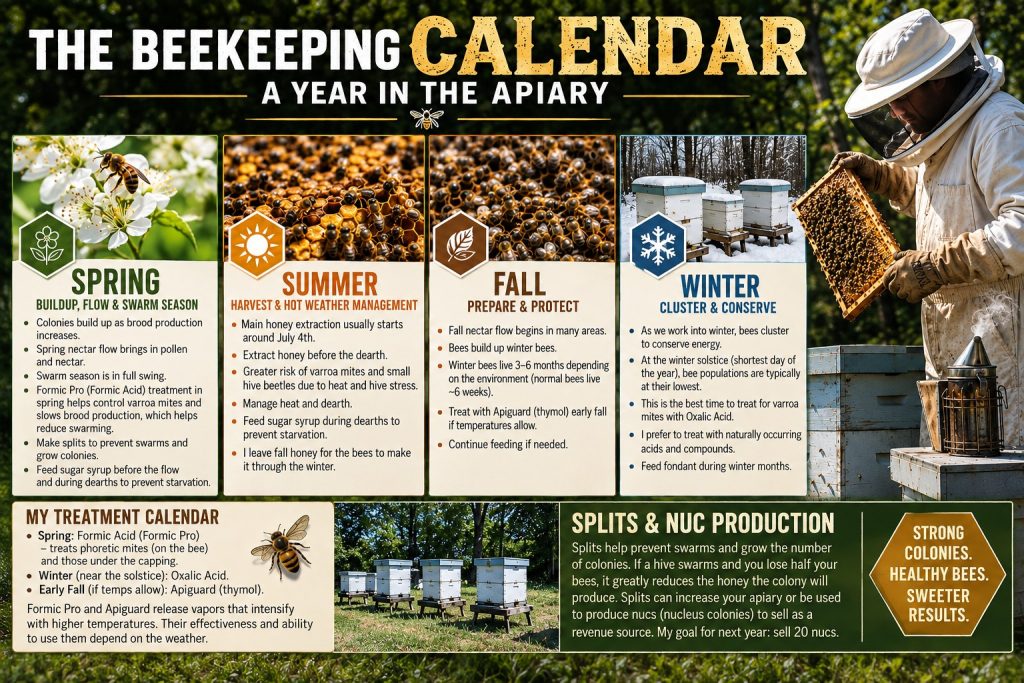
Seasonal Checklist
Spring
☐ Watch for congestion and add space as colonies grow
☐ Make splits to reduce swarming pressure
☐ Treat with Formic Pro when temperatures are right
☐ Feed sugar syrup until the main nectar flow arrives
Summer
☐ Extract honey around the Fourth of July, before the dearth sets in
☐ Monitor varroa mites and small hive beetles
☐ Watch for heat stress
☐ Feed sugar syrup during the dearth if needed
Fall
☐ Protect the colony while it raises winter bees
☐ Treat with Apiguard in early fall if temperatures allow
☐ Leave the fall honey for the bees
Winter
☐ Treat with oxalic acid near the winter solstice
☐ Feed fondant to keep food stores up
Final Thoughts
Each season prepares the colony for the next. Spring growth affects the honey harvest; summer mite levels affect the bees raised in fall; and fall food stores and colony health affect winter survival.
Throughout the year, I return to a few basic questions:
- Does the colony have enough food?
- Is the colony queenright, with evidence of a laying queen?
- Does it have enough space for its current population?
- What do inspections and mite checks tell me?
- What needs to happen now to prepare it for the next season?
The dates may shift with the weather and nectar flows, but those questions keep my work focused. Beekeeping in Alabama means following the calendar while paying close attention to what the bees are doing.

About the Author
Marty Brunson is the owner of MDB Apiaries, LLC, a small beekeeping operation with apiaries at Joy Haven Farm in Shorter and the Shady Grove Road Blueberry Patch in Tuskegee, Alabama.